How Interoception Can Rewire Your Nervous System

If you close your eyes, and sense into your gut and how it communicates to your brain via the biggest nerve in your body, the Parasympathetic Vagus nerve, what do you notice? Subtle sensations, a gentle aliveness circulating around the body, emotions surfacing, or nothing at all? In the early 1990s, Dr. Stephen Porges, founder of the Polyvagal Theory, coined interoception, our gut feedback, “as our sixth sense that allows us to become aware of our instinctual responses to our environment.”

What is Interoception?

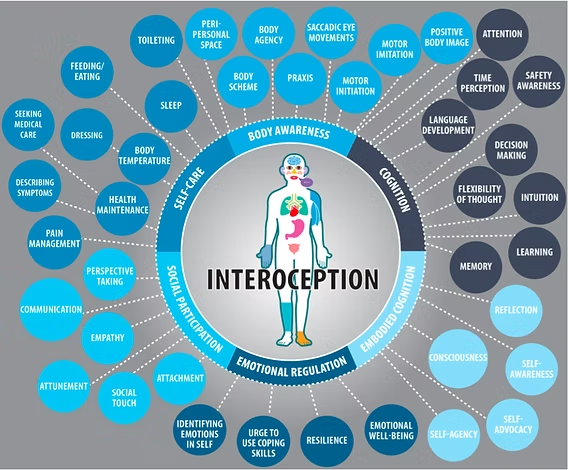
Interoception is the physical, psychological, and social development in our bodies that allows us to sense stimulus from within our viscera, communicating our gut sense of safety, protection, good and bad stressors, and also elicits empathy. It is a feedback loop from our guts that calms our limbic brains, and can also get stuck on “on” or “off” due to trauma.

When we have a healthy Nervous System and good attunement with ourselves, others and the environment, we sense when something is off before it gets bad, e.g. we feel tired, drained, sluggish, hungry, or where we are in our cycle as women. This felt sense develops or struggles to develop within us based on how we were attuned to as young children. If we learn to ignore these signals at a young age, this eventually leads to disconnect, overwhelm and sickness as adults.

How does Interoception Develop?

When we are babies we know how to rest and digest, sense fear, hunger, know if something isn’t right, or if touch by our caregivers is kind or not. It is the job of our caregivers to attune to us and meet physiological needs, which is why babies cry: they are in physiological distress. When the baby gets fed or diapers changed, they experience co-regulation, e.g. warmth with a caregiver, eye contact, down-regulation, and soothing. This attunement helps to build Nervous System regulation, secure attachment and good experiences with our guts over time.

When babies don’t get fed when hungry, for example, while sleep training, their stomachs cramp, hurt, they cry loudly, and eventually collapse into the freeze response. If they repeatedly experience intense distress without adequate co-regulation, this sets up confused or numbed out interoception, e.g. a poor, negative experience of their insides. Many parents from previous generations also didn’t receive co-regulation, were trained not to listen to their guts and to override their paternal instincts, e.g. doctor’s told them to let babies cry to self-soothe.

How do we Repair Interoception?

To restore damage done from dysregulated interoception, we need to relearn how to feel our guts and ourselves accurately again, so that we can remember how to feel, and feel safe in our bodies. This helps us to fear our internal experiences less, regain self-compassion, regulate our attention and co-regulate with others more easily. Practicing interoceptive exercises and tuning into our gut sense within our real lives, also helps us to regain accurate gut feedback, e.g. feeling, sensing, orienting in the world.
 

What is Neuroception?

Building our capacity to feel our inner world also contributes to our brains’ ability to accurately discern and signal safety or danger from our environments or other people, which is called Neuroception. If this function is faulty, the subconscious parts of our brain will overfire to make us feel that we are in danger when we are safe, and underfire to make us feel that we are safe when we are in danger. This capacity or lack of it, is also often influenced by a history of adversity and requires support to strengthen interoception so that we can choose healthy relationships and environments to thrive in.

Strengthening Interoception and Neuroception for Resilience

Check in with yourself after reading this blog and honestly ask yourself, can you rely on the info that your gut sends to your brain when you have an important decision to make or problem to solve? If this feels like an ongoing struggle, please join us for monthly Somatic Integrations and/or the 12 month Grace & Somatics: Collective Program to receive personal and community support to reconnect! Click here for more info.

Enjoy these 2 quick exercises to strengthen healthy interoception here.

Click here to find out how to learn the difference between your gut feedback and intuition!

The Science of Inspiration: How Breath Heals Trauma

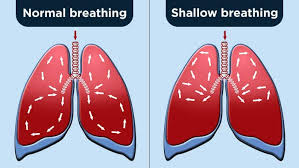
The Latin word Inspiritus means “to breathe,” but it also contains “spirit.” To inspire is literally to breathe in Spirit, to be filled with life, vitality, and even the divine. It is also the root of “inspiration,” meaning to be touched by the muses, by creativity, by something larger than ourselves. But when we’ve experienced chronic stress, trauma, or developmental overwhelm, our inspiration often disappears into the background. The natural rhythm of breath, that effortless rise and fall, can become dysregulated alongside the nervous system. Instead of flowing, breath becomes controlled: shallow, held, forced, or restricted.

This is not weakness; it’s survival. Breath is deeply tied to the autonomic nervous system. Under threat, our body activates ancient survival pathways. The vagus nerve, fight-or-flight responses, and patterns of freeze or collapse shape how we breathe.

For instance:

  • Shallow, rapid breathing signals sympathetic arousal (fight/flight).

  • Held or absent breath often reflects freeze or shutdown.

  • Overly controlled deep breaths can be a way of suppressing rather than integrating trauma.


Why “Just Taking Deep Breaths” Isn’t Enough

Many of us are taught to override discomfort with deep breaths: to force calm. But neuroscience and somatic psychology suggest this misses the deeper invitation. When we breathe over an old traumatic memory, the body doesn’t complete its survival response. Instead, the unfinished patterns remain stored, resurfacing as anxiety, chronic pain, or inflammation.

What if, instead, we let the breath guide us?

This doesn’t mean collapsing into chaos, but noticing:

  • How the breath wants to move.

  • Where sensations arise in the body.

  • Whether impulses ~ a shake, a stretch, a push ~ want completion.

Allowing breath to move naturally often creates a spontaneous release, an exhale that feels different, an emotional wave, or an involuntary shift in posture. These are signs of integration, the nervous system resetting itself, finding coherence.

The Science of Breath and Nervous System Coherence

Research in psychophysiology shows that breathing modulates key systems of the body:

  • Heart rate variability (HRV): a marker of resilience and adaptability.

  • Vascular rhythm and blood pressure: linked to parasympathetic balance.

  • Muscle tone: shaped by vagal regulation and trauma states.

When trauma remains unresolved, these systems lose coherence. Breath becomes fragmented, rhythms fall out of sync, and the body’s innate self-regulation is disrupted. But as we allow the breath to find its natural flow, coherence returns. Body and mind self-organize. Spirit, inspiration, reenters.

An Invitation

Take a moment now:

  • Sense the rhythm of your breath.

  • Notice how it moves through your chest, belly, back, even your skin.

  • Ask: Does my breath inspire me to take in life? Or does it protect me from it?

Breath reveals both vulnerability and power. By attuning to it, we reconnect not only to physiology but also to Spirit, the felt sense of being part of something greater.

Breathing in this way is not just about oxygen. It is about reawakening inspiration: to create, to connect, and to live fully alive.

If you feel your breath is shaped by old trauma or overwhelm, you don’t have to navigate this alone. Somatic therapies like Somatic Experiencing help restore nervous system coherence so you can breathe, and live, more freely.

✨ Ready to reconnect with your inspiration? Book a session with Jaya  

If you would like to learn more about the Fight/Flight/Freeze and Fawn response and how to integrate it to free up your breath more, click here!

3 Timeless keys for Happiness from Ayurveda & Somatics!

Ancient Ayurveda Meets Somatic Healing

I am currently in the midst of a 3-week Panchakarma cleanse in South India, a traditional Ayurvedic detox that includes diet, herbal medicines, rituals (Pujas), and daily body treatments. The Centre is breathtaking, surrounded by mountains and palm trees, carrying an auspicious energy that feels deeply healing on every level. These are the moments and places that support us to connect within, to our own source of happiness, while taking care of ourselves on every level.

The other evening, the Ayurvedic doctor gave a talk on the 3 principles for a happy life. According to Ayurveda, true well-being comes from living in harmony with:

  1. Our Soul

  2. The Five Elements of Nature

  3. Divinity

This 5,000-year-old wisdom resonated strongly with me, not only because of its timelessness but also because of its beautiful overlap with modern somatic therapy.

✨ Ayurveda and Somatic Healing: A Shared Path to Happiness

As I reflected on the doctor’s words, I saw clear parallels with the body-based trauma healing practices I use in my work:

1. Reconnecting with the Soul

Ayurveda teaches that when we are aligned with our soul, life flows with ease. Somatic therapies echo this by helping us reunite the fragmented parts of our psyche that split during trauma. By gently working with the body, people can reconnect to their essence—their soul—and feel whole again.

2. Returning to Nature’s Rhythm

Just as Ayurveda emphasizes balance with the five elements, somatic work supports the nervous system in returning to its natural state. Trauma often pushes the body into chronic fight, flight, or freeze. Somatic practices help release stuck energy and guide us back to regulation, where the body can rest, digest, and heal.

3. Rediscovering Divinity and Meaning

Ayurveda sees happiness as rooted in relationship with the Divine. In somatic healing, we often help people reconnect with spirituality or meaning beyond trauma. This can be a sense of inner peace, a relationship to something larger than oneself, or even an embodied connection with life’s sacredness.

Ancient Wisdom, Modern Healing

What strikes me most is how universal these principles of health and happiness are. Whether we are learning from Ayurveda or somatic therapies, both remind us that healing is about reconnection: to soul, to nature, and to spirit.

And perhaps this is the invitation for all of us: to keep returning to these connections, so we can live from a place of balance, joy, and resilience.

Ready to Reconnect with your own Deep Happiness?

If you’re longing to feel more at home in your body and more connected to your soul, I invite you to explore Somatic Trauma Integration. You can:

Your body is your greatest home, and with the right tools, it can become a place of vitality, safety, and deep happiness.

To support your journey inwards, enjoy one of my guided meditations entitled, “Returning to the Light”, by clicking here.

To read another blog on listening to your gut re: healing, and returning to happiness, check out this blog by clicking here!

Transform Relationships with Nervous System Awareness

I’m so excited to share this beautiful and practical interview with Natalie Eskenazy ( on IG @theheartsway.ca). In this conversation, we explore how understanding the nervous system can completely transform the way we show up in relationships.

You’ll learn why your nervous system health is the foundation for deeper connection, and how building the capacity to “read” both your own state and the state of your loved ones can bring more ease, safety, and joy into daily life.

Natalie offers grounded insights and actionable tips on how to gently orient to your partner, children, and close friends so that everyone feels more supported, seen, and connected. These tools not only help reduce conflict and miscommunication but also open the door to greater intimacy, resilience, and long-lasting harmony.

Whether you’re navigating family life, a romantic partnership, or deep friendships, this conversation will give you a fresh perspective on how nervous system awareness can help all of your relationships thrive.

Ps. My video picture quality was not great in Bali but the interview was!

Podcast: Somatic Healing as a Path to Grace

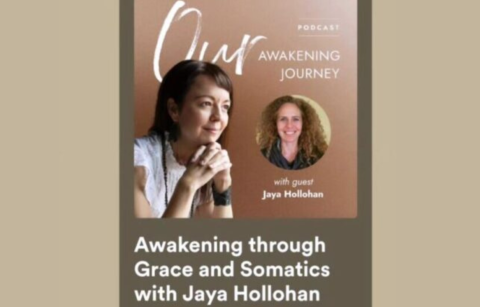
🌿 Somatic Healing as a Portal to Grace: My Interview on Our Awakening Journey Podcast

I recently had the honor of being featured on the inspiring new podcast Our Awakening Journey with radiant lightworker and somatic therapist Mylène Piché, founder of École d’éveil multidimensionnel.

This conversation was a beautiful opportunity to share about somatic work, the integration of trauma, and how these practices can serve as a profound portal into Grace and Spiritual awakening.

In our discussion, I opened up about my own life’s journey—how somatic trauma integration not only helped me heal from old wounds but also deepened my connection to Spirit, resilience, and the mystery of life itself. Over the years, I’ve witnessed countless others experience similar openings: moments where pain and trauma, when lovingly integrated, become gateways to inner peace, meaning, and divine connection.

✨ If you’ve ever wondered how healing the body can also transform the soul, this episode will uplift and inspire you.

Please enjoy this thought-provoking and heart-opening conversation on Our Awakening Journey:


👉 Listen to the episode on Spotify here

 
You can also find it on Apple Podcasts & iHeartRadio 

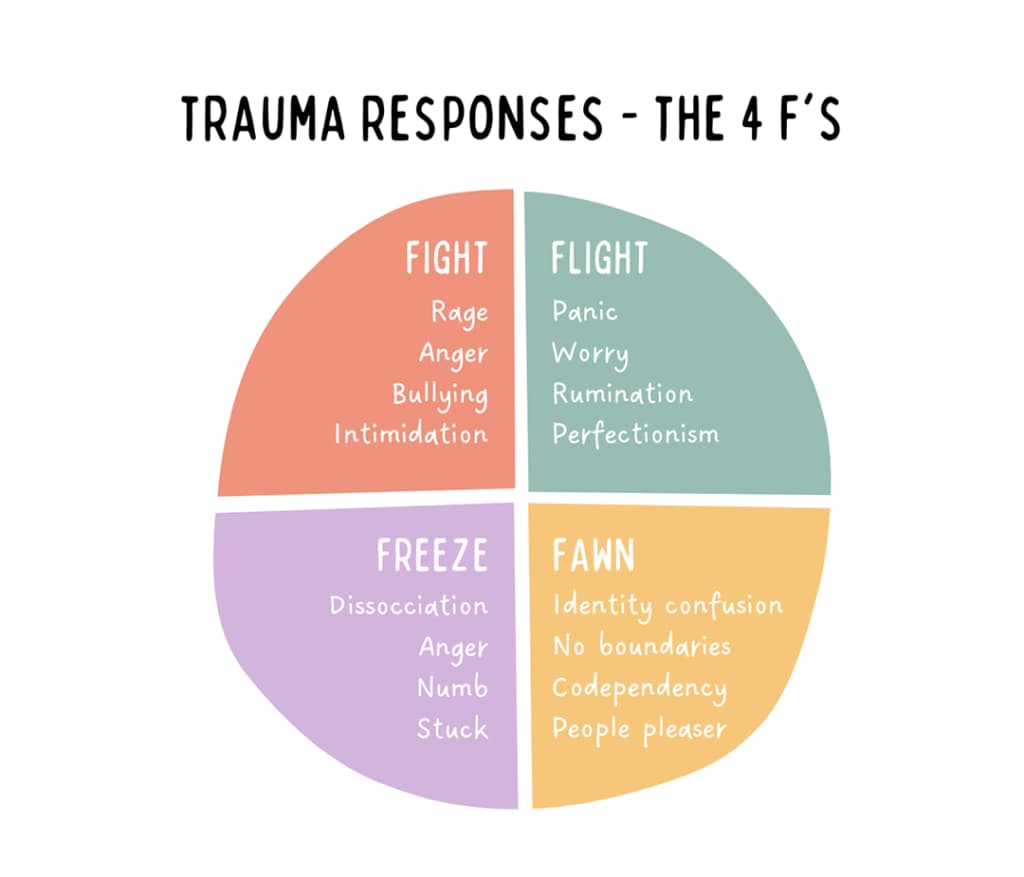
Are You Stuck in Fight, Flight, Freeze or Fawn?

Your Autonomic Nervous System (ANS) is a remarkable network that runs behind the scenes of daily life. It governs the functions we don’t consciously control, like breathing, digestion, circulation, hormone release, and immune responses. Within it are different branches that determine how we respond to the world around us, whether through calm connection, mobilization, shutdown, or appeasement.

When we understand how the ANS works, we begin to see that many of our emotional, physical, and relational challenges are not flaws or failures. They are simply our body’s best attempts to keep us safe.

The Branches of the ANS

1. Ventral Vagal (VV) – Safety, Connection & Social Engagement

The ventral vagal branch of the parasympathetic nervous system is active when we feel safe, grounded, and connected. It helps regulate our heart rate, lungs, digestion, voice, and even the muscles in our face and middle ear.

When this system is online:

  • Our face is open, warm, and expressive.

  • Our voice has melody, depth, and flow.

  • We feel grounded in our body and open to others.

  • We are curious, playful, and creative.

This is our natural “rest and connect” state. It’s also the state that supports healing, repair, and resilience.

2. Sympathetic – Fight or Flight

When social engagement doesn’t work—when we sense danger—the body turns up the dial through the sympathetic nervous system. This prepares us for action:

  • Fight: Anger, irritability, jaw clenching, fists tightening, narrowed eyes, or urges to lash out. Breath becomes shallow or held. Cortisol and adrenaline flood the system.

  • Flight: Anxiety, urgency, restlessness, fidgeting, trembling, or feeling like you “just need to get out.” Breathing is quick and shallow, legs and arms feel charged to move.

Sympathetic activation isn’t bad—it helps us survive danger. But when it’s chronic, it can erode our health, leaving us stuck in hyperarousal.

3. Dorsal Vagal (DV) – Freeze & Collapse

If fight or flight doesn’t resolve the threat, the body may move into freeze or shutdown through the dorsal vagal branch. This is an ancient survival response designed to conserve energy and “play dead” until the danger passes.

Signs of dorsal vagal shutdown include:

  • Numbness, collapse, exhaustion, or paralysis.

  • Shallow breathing, low oxygen, pallid complexion.

  • Dissociation, fogginess, or feeling “not here.”

  • Muscles become heavy, limp, or without tone.

At one end, the dorsal vagal system supports rest and digest. At the other, it protects through immobilization.

4. The Fawn Response – Appease to Survive

In addition to fight, flight, and freeze, trauma experts have identified a fourth survival response: fawn.

The fawn response arises when neither fighting, fleeing, nor freezing feel safe or effective. Instead, the body learns to survive by appeasing, placating, or over-accommodating others in order to avoid conflict with them or harm from them.

Signs of fawning may include:

  • Difficulty saying no or setting boundaries.

  • Automatically agreeing to keep peace, even at personal cost.

  • Hyper-attunement to others’ needs while ignoring your own.

  • Feeling safe only when pleasing or being accepted.

Though often overlooked, fawning is common—especially in those who grew up with unpredictable caregivers or environments where their safety depended on keeping others happy.

Health & the Nervous System

All of our body’s focus ultimately comes back to survival. When the ANS is chronically stuck in fight, flight, freeze, or fawn, the body has less capacity to repair itself. Systems like digestion, immunity, and cardiovascular function are put on hold. Over time, this contributes to inflammation, autoimmunity, pain syndromes, and even neurodegenerative conditions.

Research, including the work of Dr. Gabor Maté, shows that high levels of early stress and trauma (measured by ACE scores—Adverse Childhood Experiences) correlate strongly with later physical and mental health challenges.

As you read this, notice your own body:

  • Do you feel warmth, openness, and ease (ventral vagal)?

  • Are you restless, tense, or activated (sympathetic)?

  • Do you feel foggy, numb, or heavy (dorsal vagal)?

  • Do you notice a pull to “manage” or appease (fawn)?

Simply observing is the first step toward regulation.

If you feel tight or constricted, try softening your gaze or looking at something pleasant in your environment. If you feel frozen or numb, gently move your eyes, shoulders, or spine. If you notice fawning, pause and ask: “What do I need right now?”

These small acts invite your system back toward balance: towards the ventral vagal state of safety and connection.

Welcome to your Autonomic Nervous System!
By understanding its language, we learn to work with it, rather than against it, and open the door to healing, resilience, and freedom.

Ready to explore your nervous system more deeply, and support clients, family and friends with theirs? Join us for the 6 week Grace & Somatics: Trauma-Informed Life Training by clicking here!

To read more about why integrating our “stuckness” matter, please click my related blog here.

Is Somatic Experiencing Evidence Based?

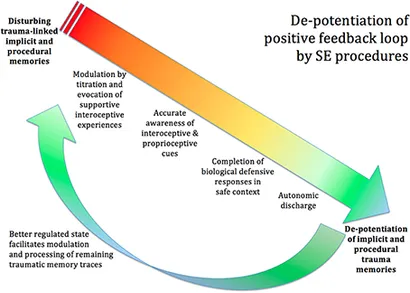
Somatic Experiencing (SE) is a body–mind approach to healing trauma that focuses on helping people reconnect with and befriend their bodies. Instead of asking clients to re-tell or relive painful memories, SE uses the body as the gateway to healing, guiding individuals toward safety, regulation, and resilience.

In SE, clients are guided to notice and gently explore their bodily experiences, which fall into three main categories:

  • Interoceptive – internal sensations (such as heartbeat, breath, gut feelings)

  • Proprioceptive – awareness of where the body is in space

  • Kinesthetic – awareness of movement, both big and small

By working with these subtle sensations, SE helps people gradually shift from states of overwhelm or shutdown into balance and regulation, without forcing them to confront traumatic memories head-on.

How Does our Body get Stuck with Trauma?

Unlike stress, which is the body’s temporary response to challenge, trauma develops when the nervous system is unable to return to a state of regulation. As Dr. Peter Levine, the founder of SE, explains: trauma isn’t defined by the event itself, but by how our nervous system responds to it.

That’s why two people may experience the same situation but walk away with very different outcomes, one regulated, one traumatized. Developmental history, early attachment, social support, and biological sensitivity all shape how we experience and integrate overwhelming events.

The autonomic nervous system (ANS)—which includes the sympathetic (fight/flight) and parasympathetic (rest/digest, freeze) branches, can sometimes respond paradoxically, activating both systems at once and creating dysregulation. SE works directly with these patterns, allowing the nervous system to “renegotiate” trauma by safely releasing the bound survival energy that got stuck in the body during moments of overwhelm.

How Somatic Experiencing Works

Through gentle awareness practices, guided exploration, and sometimes touch (always with consent), SE helps people:

  • Discharge incomplete fight/flight responses

  • Come out of freeze states and reconnect with vitality

  • Regain a sense of safety in their body

  • Build resilience and regulation in daily life

Over time, this restores the body’s natural rhythm and helps both mind and body return to a state of balance.

The Science Behind Somatic Experiencing

Research has increasingly demonstrated the effectiveness of SE:

  • Brom et al. (2017) – After 15 weekly SE sessions, participants reported significant decreases in PTSD symptoms and depression.

  • Andersen et al. (2017) – In a study of PTSD and chronic pain, SE combined with treatment-as-usual led to significant reductions in PTSD symptoms and fear of movement compared to treatment-as-usual alone.

  • Natural disaster survivor studies – SE interventions have shown lasting benefits, with participants reporting less arousal, intrusion, and avoidance. Eight months later, 90% noted significant improvement or were symptom-free.

These findings show that SE is not only powerful in reducing trauma symptoms, but also effective in supporting resilience and recovery across diverse populations.

Trauma can make us feel disconnected from ourselves, from others, and from life. SE offers a gentle yet profound path back to wholeness, helping the body resolve what was once overwhelming and return to a state of safety and vitality.

By learning to listen to the body and trust its wisdom, healing becomes possible: one sensation, one breath, one moment of safety at a time.

To learn more about integrating stuck fight, flight, and freeze states in your body, please click here!

Integration of Near Death & Out of Body Experiences

I recently completed Dr. Peter Levine’s Eye of the Needle Part 2 training in San Diego, which focuses on the integration of near-death experiences (NDEs). This training was both deeply moving and eye-opening, offering profound insights into what happens when the body, psyche, and spirit are brought to the threshold between life and death.

What Are Near-Death and Out-of-Body Experiences?

NDEs can arise from a broad range of circumstances, including:

  • Cardiac arrest and heart attacks

  • Serious accidents or injuries

  • Surgeries and use of anesthetics

  • Suffocation or near-drowning

  • Life-threatening illness or poisoning

  • High fevers

  • Birth conditions involving lack of oxygen (anoxia/hypoxia)

  • Coma or concussion

  • Episodes of extreme emotional distress

Many peak experiences, moments of heightened awareness and transcendence, can also resemble NDEs, even when physical danger isn’t immediately present.

Closely related are Out-of-Body Experiences (OBEs), in which people perceive themselves as leaving or floating outside their physical body. These may occur during medical crises (such as surgery or cardiac arrest) or spontaneously, often leaving people uncertain how to make sense of what happened.

At their core, NDEs and OBEs are profound psycho-physiological events, not merely hallucinations or mental illness. They occur when a person is close to death or in a crisis so intense that the nervous system moves beyond its ordinary bounds of functioning.

The phrase eye of the needle refers to this liminal, transitional state between life and death. Biologically, it is similar to thanatosis, a state of shock or immobility in which the body “plays dead” as a survival response. In this place, voluntary activity ceases, and the nervous system hovers between collapse and transcendence.

Dr. Levine describes it as a space where the boundaries between existence and non-existence blur—an experience that is both terrifying and awe-inspiring.

Common Features of NDEs and OBEs

While every near-death or out-of-body experience is unique, research and personal accounts show that people often report:

  • A sense of peace, tranquility, or bliss

  • A life review or reliving of key memories

  • Feelings of omniscience or hyper-awareness

  • Separation from the body (floating above oneself, watching from outside)

  • Emotional detachment or loss of fear

  • A sense of unity with the cosmos

  • Transcendence of the physical realm

  • Entering a void or state of “nothingness”

For many, these experiences feel deeply real and transformative, yet paradoxically destabilizing when they return to everyday life.

Trauma and Polarities: Heaven and Hell Realms

NDEs and OBEs often involve a passage through extreme states:

  • Freeze, pain, and terror (the “hell realm”)

  • Dissociation or absence of sensation, followed by bliss, peace, or oneness (the “heaven realm”)

Without integration, people may find themselves stuck in one polarity or oscillating between both. This can leave them confused, disoriented, or disconnected from life.

A 2019 study published by Eureka Alert/AAAS revealed that one in ten people worldwide report having had a near-death experience, with 95% of out-of-body experiences occurring in medical settings. This shows just how common yet under-discussed these phenomena really are.

Unintegrated NDEs and OBEs can profoundly affect day-to-day living—impacting physical health, mood, relationships, and spiritual well-being. The nervous system, once overwhelmed, may stay dysregulated, leaving a person vulnerable to anxiety, depression, or physical symptoms.

Through Somatic Experiencing® (SE) and Dr. Levine’s Eye of the Needle framework, the body is supported to:

  • Release bound survival energy held in freeze states

  • Gradually reconnect with sensations and emotions in safe ways

  • Reconcile the polarities of terror and bliss into a coherent whole

  • Return to regulation of the autonomic nervous system

This allows people to not only survive an NDE or OBE but to integrate it as a source of wisdom, resilience, and transformation.

Returning Through the Needle

When we are able to “pass through the eye of the needle” and reinhabit our bodies, life becomes more grounded, vibrant, and meaningful. The gift of an NDE or OBE lies not just in touching transcendent states, but in bringing that perspective back into embodied living—into our relationships, choices, and presence with the world.

This is my wish for us all: that no matter how close we come to the threshold, we find our way home again—fully alive, deeply human, and open to life’s unfolding mystery.

Expanding the Window of Tolerance

As babies, when we have healthy attachment with attuned, available, and nurturing caregivers, we lay the foundations for the optimal development of our brain and nervous system. The co-regulation offered by caregivers, e.g. rocking, soothing, making eye contact, responding to cries, teaches our nervous system how to return to calm after stress. Over time, this gives us the ability to self-regulate independently as we grow older.

But what happens if this foundation is disrupted? Or if trauma, loss, or overwhelming life experiences come into play later in life? This is where the Window of Tolerance comes in.

What is the Window of Tolerance?

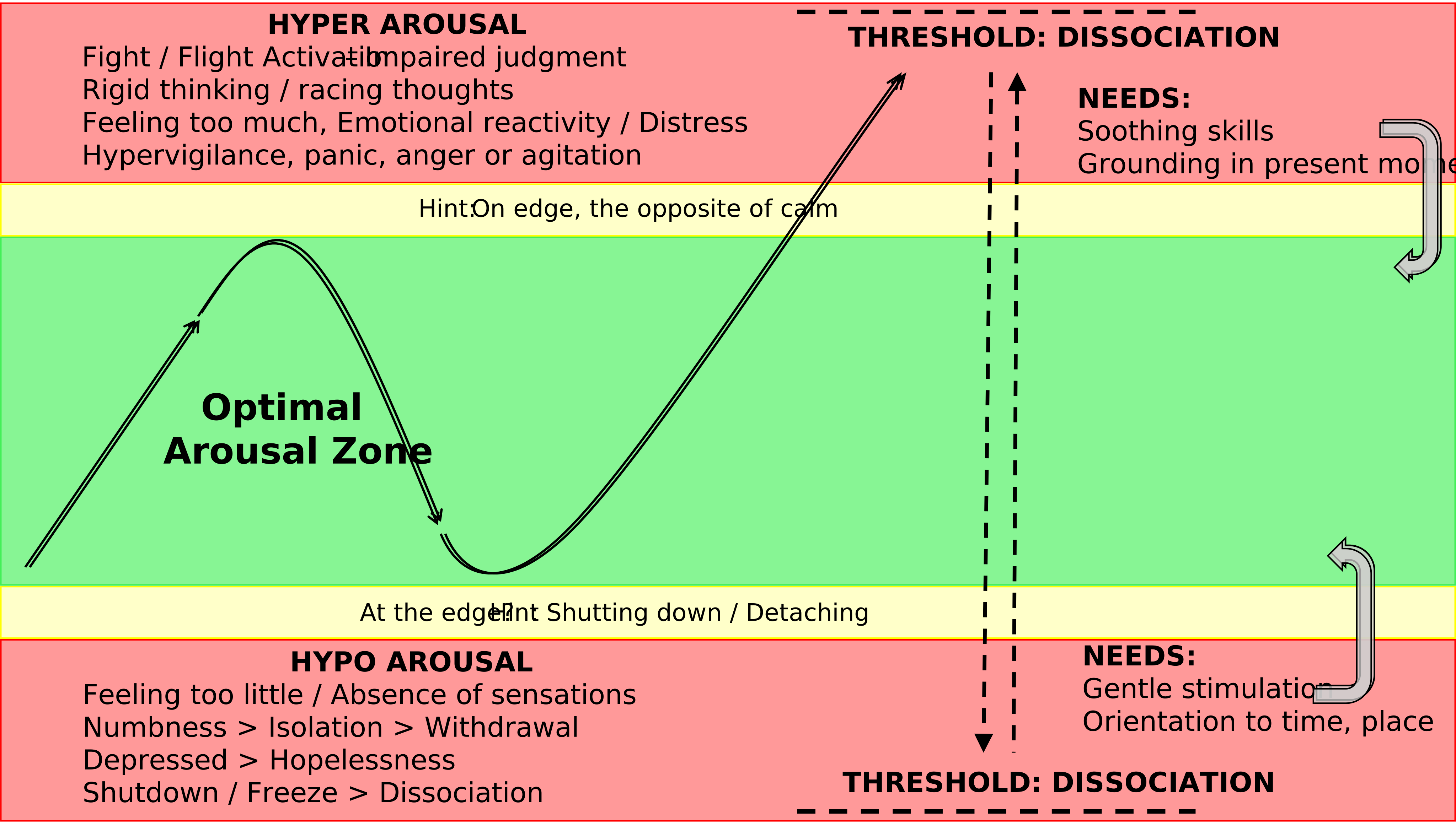
The term Window of Tolerance was coined by Dr. Dan Siegel to describe the range of emotional and physiological arousal we can experience while still being able to function and cope effectively.

When we are within our window, we can ride the ups and downs of life: hurt, anxiety, sadness, pain, anger, and still find our way back to balance. For example, you might feel stressed before a presentation, but after taking a few deep breaths, talking it through with a friend, or finishing the presentation itself, you can return to calm.

We all fluctuate in arousal during the day, it’s normal to get excited, worried, tired, or discouraged, but if we have strategies and enough capacity in our nervous system, we can find our way back without becoming overwhelmed.

When we are pushed outside the window, though, things change:

  • Hyperarousal (too much activation): fight/flight energy, anxiety, panic, anger, overwhelm, hypervigilance.

  • Hypoarousal (too little energy): shutdown, numbness, depression, exhaustion, disconnection.

The below diagram usually shows how we move in and out of the window, with periods of activation followed by settling.

Trauma and Attachment Wounds

When we experience trauma or have unmet attachment needs, our nervous system’s natural capacity to self-regulate can be disrupted.

  • Our senses may become heightened.

  • Experiences and emotions feel more intense.

  • Strategies that usually work (breathing, distraction, self-talk, connection) may no longer be accessible.

  • Our window of tolerance shrinks, giving us less space to ebb and flow with life’s ups and downs.

This is why someone with unresolved trauma may feel overwhelmed by things that seem “small” to others, it’s not a matter of willpower or weakness, but of nervous system capacity.

Learning how to track and shift emotions becomes a powerful tool for widening this window again, so that regulation and integration are possible throughout the body, mind, and brain. Without this, people often get stuck in “On” (hyperarousal) or “Off” (hypoarousal).

To further understand these states:

  • Calm Arousal is optimal. We move in and out of this range naturally all day long.

  • Hyperarousal happens when fear, pain, anger, or trauma triggers overwhelm us. The nervous system gets stuck on “On”, racing thoughts, rapid heartbeat, hypervigilance, inability to rest or sleep, emotional flooding, including dissociative rage.

  • Hypoarousal often comes after too much hyperarousal. When the overwhelm surpasses what the brain and body can tolerate, we shut down. The nervous system gets stuck on “Off”, numbness, exhaustion, flat affect, depression, disconnection, loss of appetite, sleeping excessively, etc.

Interestingly, the nervous system doesn’t let us stay in one state forever. For example:

  • After too much anxiety, the body may numb itself into shutdown.

  • After too long in shutdown, people may gravitate toward risky or stimulating behaviors (drugs, thrill-seeking, conflict) just to feel alive again.

This seesaw can become a survival pattern when regulation hasn’t been learned or embodied.

Without healthy co-regulation in childhood, or when trauma is unresolved, people often turn to whatever strategies they can find to regulate:

  • Someone with excessive fear or anxiety (hyperarousal) may use depressants (alcohol, sedatives) to quiet their system.

  • Someone feeling flat or disconnected (hypoarousal) may seek stimulants (caffeine, sugar, drugs, risky behavior) to feel alive again.

The problem is that these strategies don’t create lasting regulation. The true goal is to help the nervous system to learn safer, natural, and healthier pathways to bring it back into balance.

Co-Regulation in Action: Broadening the Window

Parents, partners, and loved ones can support this process by:

  • Naming what they see: “It looks like you’re feeling overwhelmed. Do you want to take a break?”

  • Offering presence and grounding: a calm voice, gentle touch, or simply sitting quietly with someone.

  • Encouraging mindful noticing: “What do you feel in your body right now? What might help you feel better?”

Dr. Siegel calls this “name it to tame it”, naming emotions helps reduce their intensity, creating a sense of validation and being seen.

When children, teens, or adults practice noticing sensations, emotions, and needs, they begin to rewire their nervous system toward greater resilience.

Ultimately, healing means expanding the window of tolerance so that:

  • People can experience a wider range of emotions without being thrown into dysregulation.

  • The nervous system has more flexibility and resilience.

  • Life feels more spacious, grounded, and livable.

By cultivating co-regulation, self-awareness, and trauma-informed tools, we can grow our capacity to move through emotional intensity and return to calm once more.


Somatic Stress Busters for Kids & Parents

Peter Levine’s Somatic Tools to Help Kids Feel Safe and Resilient

During stressful times, children often sense more than we realize. Even if they don’t fully understand what’s happening, they pick up on the anxiety, fear, and overwhelm of the adults around them. Without clear support, this can leave them feeling frightened, confused, or sad.

I recently listened to a powerful interview with Peter Levine, PhD, the founder of Somatic Experiencing (SE), and Dr. Maggie Kline, Senior SE Faculty Member, psychotherapist, and retired school psychologist. In this 45-minute discussion, they shared simple, science-backed tools that caregivers and Somatic Experiencing practitioners can use to support children right now.

You can access the full interview here.

Why Kids React Differently to Stress

When adults face external threats, we often move into fight, flight, or, even when overwhelmed, collapse. But children can’t simply fight or flee. Their biology drives them to seek safety through attachment, turning toward parents or caregivers for grounding and reassurance.

That’s why it’s so important for adults to first regulate themselves. When we balance and ground, we not only soothe our own nervous system but also prevent passing our anxiety onto kids. Children feel safer when they know:

  • They are protected.

  • They can express their feelings without judgment.

  • Their caregivers are present, calm, and reliable.

Somatic Practices for Parents and Kids

Peter Levine suggests weaving everyday activities into family life to restore safety and resilience:

  • Storytelling – Make up stories together to spark imagination and connection.

  • Movement and Play – Dance, sing, cook, or exercise as a family.

  • Nature Walks – Time outdoors helps regulate both body and mind.

  • Deep Listening – Give kids space to share their feelings and be heard.

  • Laughter – A natural way for children to release stress and return to creativity and joy.

These simple practices remind kids that they are safe and supported, while also strengthening their natural resilience.

Somatic Experiencing Exercises

For both adults and kids, SE offers practical tools to reset the nervous system:

  • 8-Minute Video: Peter Levine guides adults through grounding practices to reduce fear and panic. [Click here to access it.]

  • 5-Minute Video: Designed specifically for children, this video shares playful yet effective SE exercises. [Watch it here.]

Even just a few minutes of these practices can shift the body out of survival mode and back into a state of ease.

The truth is, resilience isn’t about avoiding stress, it’s about learning how to return to balance. By grounding ourselves and using Somatic Experiencing tools, we give children the gift of safety, creativity, and confidence.

✨ Keep well, nourish yourself, and seek out daily moments of joy. Your regulation is their regulation.

If you would like more support with you or your child’s nervous system regulation, feel free to book a one-on-one session here.

To enjoy one of my guided meditations, including binaural beats, to calm your nervous system, please click here.